Today we visit the discussion forum.
-We Introduce ourselves (30 Words)
-We briefly explain our topic.(150 words)
-We briefly outline how the strand fits the topics (50 words)
-We briefly ouline how the AOI fits the topic (50 Words)
-We respond to one posting of a classmate by critiquing any issue in their posting.
Link
http://groups.google.com/group/print-media-the-class-project?hl=en
Best
Lesson in Progress
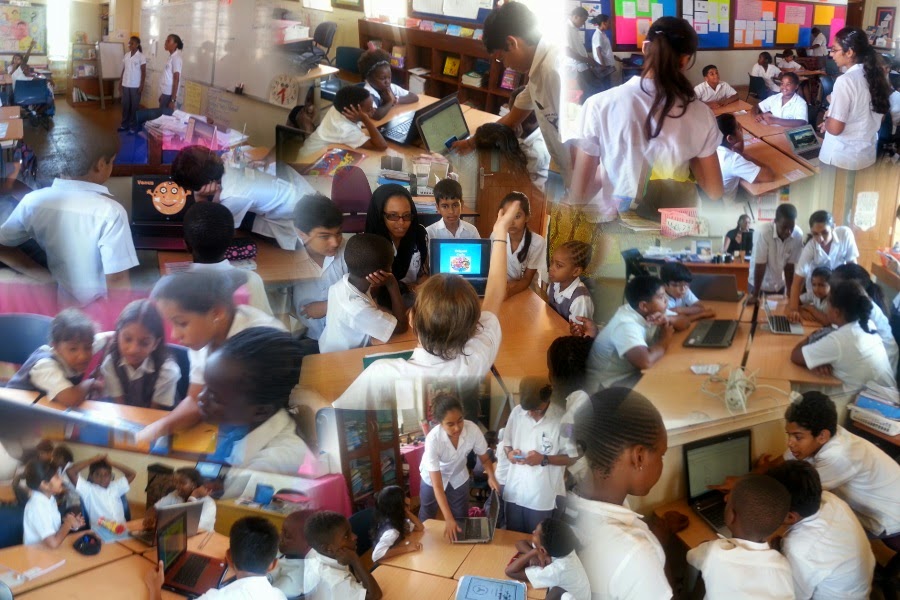
MYPCT Y7 CLASS
Thursday, March 31, 2011

Monday, March 28, 2011
Investigation Questions
1. What is the problem with current print media? (250 words)
2. What is the relevance of solving this problem? (100 words)
3. How can we solve this problem? (250 words)
4. How can we test the solution above? (250 words)
2. What is the relevance of solving this problem? (100 words)
3. How can we solve this problem? (250 words)
4. How can we test the solution above? (250 words)
Friday, March 25, 2011
MYPCTY10 VOL 10 (3)
USING PRINT MEDIA TO EDUCATE THE MASSES
Guiding Question “How can we use print media to address issues in our community”
AOI
APPROACHES TO LEARNING (ATL) - Through Approaches to learning, we aim to help students understand how they learn, know and communicate their understanding. Each course helps students:
Strengthen their oral and written communication skills
Become effective researches by asking good questions
HEALTH AND SOCIAL EDUCATION - This area of interaction deals with key aspects of development leading to complete and healthy lives. It encompasses physical, social and emotional health and intelligence. The aim is to develop in students a sense of responsibility for their own well-being and for their physical and social environment. In particular, the exploration of this area in the subject groups allows students to discuss and reflect on the following aspects of health:
Physical Psychological Sociological Economic legal
AK Strand -Governance
Leading Qualities (core leadership qualities)
a disposition towards finding innovative solutions to challenges
a critical awareness of individual rights and responsibilities within a society
Identity and Citizenship
an ability and willingness to participate in projects which involve real solutions to real problems, leading to critical reflection on goals achieved and the comparison of different perspectives on the issues
PROBLEM
There many issues happening in our communities and the awareness levels are minimal or not present at in some cases. Currently the media we have is not issue specific but presents multiple aspects. The publishers prefer this approach because of the economic demands. Selling is profitable when presented to multiple audiences. Some of the media used are not portable such as videos while others are not accessible such as internet. The print media is portable and it can be revisited several times, even in remote locations. However what is present is multiple issues in a single print media. Moreover the youth are not proactive in addressing issues in their community.
CHALLENGE
Research on an issue in the society and explore how it is being addressed. Design a print media to create awareness and to engage the readers on the issue at hand. Use video, website, power point presentation and online collaboration to inform/advertise the community about your print media. Follow the design cycle.
The design folder should be presented as a booklet with table of contents, page numbering and the correct organization of the design cycle. After the magazine is done, the various forms of representation should advertise your magazine. The magazine is 8 paged on 2 A3 papers back to back.
Time Line – 12 weeks
Visit http://mypct.blogspot.com for more details
Guiding Question “How can we use print media to address issues in our community”
AOI
APPROACHES TO LEARNING (ATL) - Through Approaches to learning, we aim to help students understand how they learn, know and communicate their understanding. Each course helps students:
Strengthen their oral and written communication skills
Become effective researches by asking good questions
HEALTH AND SOCIAL EDUCATION - This area of interaction deals with key aspects of development leading to complete and healthy lives. It encompasses physical, social and emotional health and intelligence. The aim is to develop in students a sense of responsibility for their own well-being and for their physical and social environment. In particular, the exploration of this area in the subject groups allows students to discuss and reflect on the following aspects of health:
Physical Psychological Sociological Economic legal
AK Strand -Governance
Leading Qualities (core leadership qualities)
a disposition towards finding innovative solutions to challenges
a critical awareness of individual rights and responsibilities within a society
Identity and Citizenship
an ability and willingness to participate in projects which involve real solutions to real problems, leading to critical reflection on goals achieved and the comparison of different perspectives on the issues
PROBLEM
There many issues happening in our communities and the awareness levels are minimal or not present at in some cases. Currently the media we have is not issue specific but presents multiple aspects. The publishers prefer this approach because of the economic demands. Selling is profitable when presented to multiple audiences. Some of the media used are not portable such as videos while others are not accessible such as internet. The print media is portable and it can be revisited several times, even in remote locations. However what is present is multiple issues in a single print media. Moreover the youth are not proactive in addressing issues in their community.
CHALLENGE
Research on an issue in the society and explore how it is being addressed. Design a print media to create awareness and to engage the readers on the issue at hand. Use video, website, power point presentation and online collaboration to inform/advertise the community about your print media. Follow the design cycle.
The design folder should be presented as a booklet with table of contents, page numbering and the correct organization of the design cycle. After the magazine is done, the various forms of representation should advertise your magazine. The magazine is 8 paged on 2 A3 papers back to back.
Time Line – 12 weeks
Visit http://mypct.blogspot.com for more details
Thursday, March 24, 2011
Magazines- Knowing about them.

Research on Magazines
Find out
-Why are they written.
-How are they organised
-Contents
-Main Story
-Feature Story
-Letters to the Editor
-Picture Speak
-Crossword Puzzle
-Word Serch Puzzel
-Jokes
-How is the Marketing done
-TV ads
-Presentations
-Web Sites
Compile your findings. Do not cut and paste use your own words. Any information that is not yours MUST be quoted. Follow the APA standard of fomarting.
Answer the following questions
-Which is your favorite magazine?
-Why do you like it?
-How did you know about it?
-Why do you think the magazine was published?
Submit your Findings on Monday 29th 8.50 a.m without FAIL
Saturday, February 26, 2011
Criterion F: attitudes in technology

This criterion refers to students’ attitudes when working in technology. It focuses on an overall assessment of two aspects:
• personal engagement (motivation, independence, general positive attitude)
• attitudes towards safety, cooperation and respect for others.
By their very nature these qualities are difficult to quantify and assess, and assessment should therefore take into account the context in which the unit of work was undertaken.
Achievement level Descriptor
0 The student does not reach a standard described by any of the descriptors given below.
1-2 The student occasionally displays a satisfactory standard in one of theaspects listed above.
3-4 The student frequently displays a satisfactory standard in both of the aspects listed above.
5-6 The student consistently displays a satisfactory standard in both of the aspects listed above.
Evaluate

Students are expected to evaluate the product/solution against the design specification in an objective manner based on testing, and to evaluate its impact on life, society and/or the environment. They are expected to explain how the product/solution could be improved as a result of these evaluations.
Achievement level Descriptor
0 The student does not reach a standard described by any of the descriptors given below.
1-2 The student evaluates the product/solution or her own performance.
The student makes some attempt to test the product/solution
3-4 The student evaluates the product/solution and his or her own performance and suggests ways in which these could be improved. The student tests the product/solution to evaluate it against the design specification
5-6 The student evaluates the success of the product/solution in an objective manner based on the results of testing and the views of the intended users The student provides an evaluation of his or her own performance at each stage of the design cycle arid suggests improvements Tie student provides an appropriate evaluation of the impact of the product/solution on life, society and/or the environment.
Product testing: A stage in tie design process where versions of products (for example, prototypes) are tested against the need. applied to the context and presented to the end-user or target audience.
Students are expected to evaluate their own performance at each stage of the design cycle and to suggest ways in which their performance could be improved.
Thursday, February 17, 2011
CREATE

The student will follow the plan developed to come up with the design specification. The student will maintain a process journal to capture the steps in the Create.
A write up is expected to capture the create experience.
Rubric
CREATE
The student has demonstrated a thorough competence in choice of strategy and implementation. He/she has fully justified any modification to the original design specification, and produced original and outstanding work.
Criterion
MAX 6

Thursday, January 20, 2011
Plan

PLAN
Design the Model
• generate a range of designs that attempt to meet the design specifications
• compare the designs against the design specifications and
identify the pros and cons of each design
• select one program design and justify its choice and possible improvements.
Plan the Model
• devise, with guidance, a series of logical steps to create the product/solution
• construct a plan to create the product/solution that makes effective use of resources and time
• analyze the plan and explain the need for any modifications to the design.
Assessment Rubric
Achievement level
Criterion C: PLAN
0 The student does not reach a standard described by any of the descriptors given below.
1–2 The student produces a plan. The plan makes reference to resources and time. Describes, with guidance, the steps needed to create the product. With guidance, evaluate the plan and identify modification
3–4 With some guidance, the student produces a plan that contains some detail of the steps. The plan shows some details in term of resources and time. The student attempts to analyse the plan against the design specifications.
5–6 The student produces a plan that contains a number of logical steps. The plan shows effective use of time and
resources. The student identifies key aspects and safety hazards with the plan. The student analyses the plan against the design specification with regards to modification
Design

Requirement
I dentify a communication method.
Develop three design on the communication method.
For each design analyse it against the design specification.
Select the best design and justify the selection.
Achievement level
Criterion B: DESIGN
Acknowledging resources is required for level 5-6
0 The student does not reach a standard described by any of the descriptors given below.
1–2 The student generates one design. Designs compared against the design specification. Selects one. Attempt of pros and cons of each design identified.
3–4 The student generates a few designs. Designs compared against the design specification. Selects one. Attempt of pros and cons of each design identified.
5–6 The student generates designs. Designs that meet the design specification. Compares designs against design
specification. Select one and justifies with a description the choice against the design specification. Pros and cons of each design are identified
Thursday, January 13, 2011
Investigate 7/1/2011-21/1/2011
Investigate
• Research the history of communicating information and produce a timeline of landmark developments
• Research current methods of communication employed at sea
• Research current methods of communication employed by lifeguards
• Research methods or systems from other areas ( e.g. tic-tac, sign language ) which could be adapted or replicated
• Investigate different number systems ( binary, octal, etc. ) to ascertain how many instructions could be generated for certain methods of communication
• Research alternative methods of communicating information other than visual or audible
• Investigate different methods of 2-Way communication
• Find contact details of beach guard service at Pirates
• Record research findings in your Process Journal
Assessment
INVESTIGATE Identify the problem to be solved • consider the importance of communication.
• Present a brief outline of a current system of communications in sea.
Develop the design brief • ask relevant questions at the different stages of the investigation.
• identify appropriate sources of information and acknowledge these using a recognized convention (newspaper, interviews, users)
• collect and select information, organize it logically and, with guidance, begin to analyze it
• consider, with guidance, the value of sources of information.
Formulate a design specification for the Model • list, with limited guidance, the specific requirements that must be met by the product/solution
• design, with limited guidance, tests to evaluate the product/solution against the design specification.
Rubric
Level of
Achievement
Criterion A: INVESTIGATE
0 The student does not reach a standard described by any of the descriptors given below.
1–2 The problem
The student identifies the problem to be solved. The student writes a simple design brief.
The design brief
The student states and selects useful questions to guide the investigation, with guidance, few resources are identified with guidance, information is collected or selected, organized and presented.
The design specification
The student, with guidance, identifies a method for testing to the product/solution again the design specification. The student, with guidance, is able to list some of the specific requirements met by the product/solution. The Jobs of team member is identified.
3–4 The problem
The student id importance of the problem.
The design brief
The student states and selects appropriate questions to guide the investigation, most resources are identified. Detailed information is collected, selected, organized and presented.
The design specification
The student, with some guidance, outlines a method for testing to compare the product/solution against the design
specification. The student, with some guidance, is able to list many of the specific requirements met by the
product/solution. The Jobs of team members is clearly identified.
5–6 The problem
The student identifies the problem to be solved. The student outlines a simple design brief. The student describes the importance of the problem
The design brief
The student states and selects appropriate questions to guide the investigation, large list of resources are identified and acknowledged. Extensive information is collected, selected organized and presented.
The design specification
The student, with limited guidance, describes a method for testing to evaluate the product/solution against the
Design specification.
The student, with limited guidance, is able to list the specific requirements met by the product/solution. The
Jobs of team members is clearly identified with detail.
• Research the history of communicating information and produce a timeline of landmark developments
• Research current methods of communication employed at sea
• Research current methods of communication employed by lifeguards
• Research methods or systems from other areas ( e.g. tic-tac, sign language ) which could be adapted or replicated
• Investigate different number systems ( binary, octal, etc. ) to ascertain how many instructions could be generated for certain methods of communication
• Research alternative methods of communicating information other than visual or audible
• Investigate different methods of 2-Way communication
• Find contact details of beach guard service at Pirates
• Record research findings in your Process Journal
Assessment
INVESTIGATE Identify the problem to be solved • consider the importance of communication.
• Present a brief outline of a current system of communications in sea.
Develop the design brief • ask relevant questions at the different stages of the investigation.
• identify appropriate sources of information and acknowledge these using a recognized convention (newspaper, interviews, users)
• collect and select information, organize it logically and, with guidance, begin to analyze it
• consider, with guidance, the value of sources of information.
Formulate a design specification for the Model • list, with limited guidance, the specific requirements that must be met by the product/solution
• design, with limited guidance, tests to evaluate the product/solution against the design specification.
Rubric
Level of
Achievement
Criterion A: INVESTIGATE
0 The student does not reach a standard described by any of the descriptors given below.
1–2 The problem
The student identifies the problem to be solved. The student writes a simple design brief.
The design brief
The student states and selects useful questions to guide the investigation, with guidance, few resources are identified with guidance, information is collected or selected, organized and presented.
The design specification
The student, with guidance, identifies a method for testing to the product/solution again the design specification. The student, with guidance, is able to list some of the specific requirements met by the product/solution. The Jobs of team member is identified.
3–4 The problem
The student id importance of the problem.
The design brief
The student states and selects appropriate questions to guide the investigation, most resources are identified. Detailed information is collected, selected, organized and presented.
The design specification
The student, with some guidance, outlines a method for testing to compare the product/solution against the design
specification. The student, with some guidance, is able to list many of the specific requirements met by the
product/solution. The Jobs of team members is clearly identified.
5–6 The problem
The student identifies the problem to be solved. The student outlines a simple design brief. The student describes the importance of the problem
The design brief
The student states and selects appropriate questions to guide the investigation, large list of resources are identified and acknowledged. Extensive information is collected, selected organized and presented.
The design specification
The student, with limited guidance, describes a method for testing to evaluate the product/solution against the
Design specification.
The student, with limited guidance, is able to list the specific requirements met by the product/solution. The
Jobs of team members is clearly identified with detail.
Subscribe to:
Posts (Atom)